ServicesVehicle Restraints
Vehicle Restraints in Stroudsburg
We repair and install vehicle restraints that lock a trailer to the dock until your crew is done. That means anchors set deep in sound concrete, wiring run clean, and lights that match what the hook is doing. Your forklift drivers get a dock that stays put.
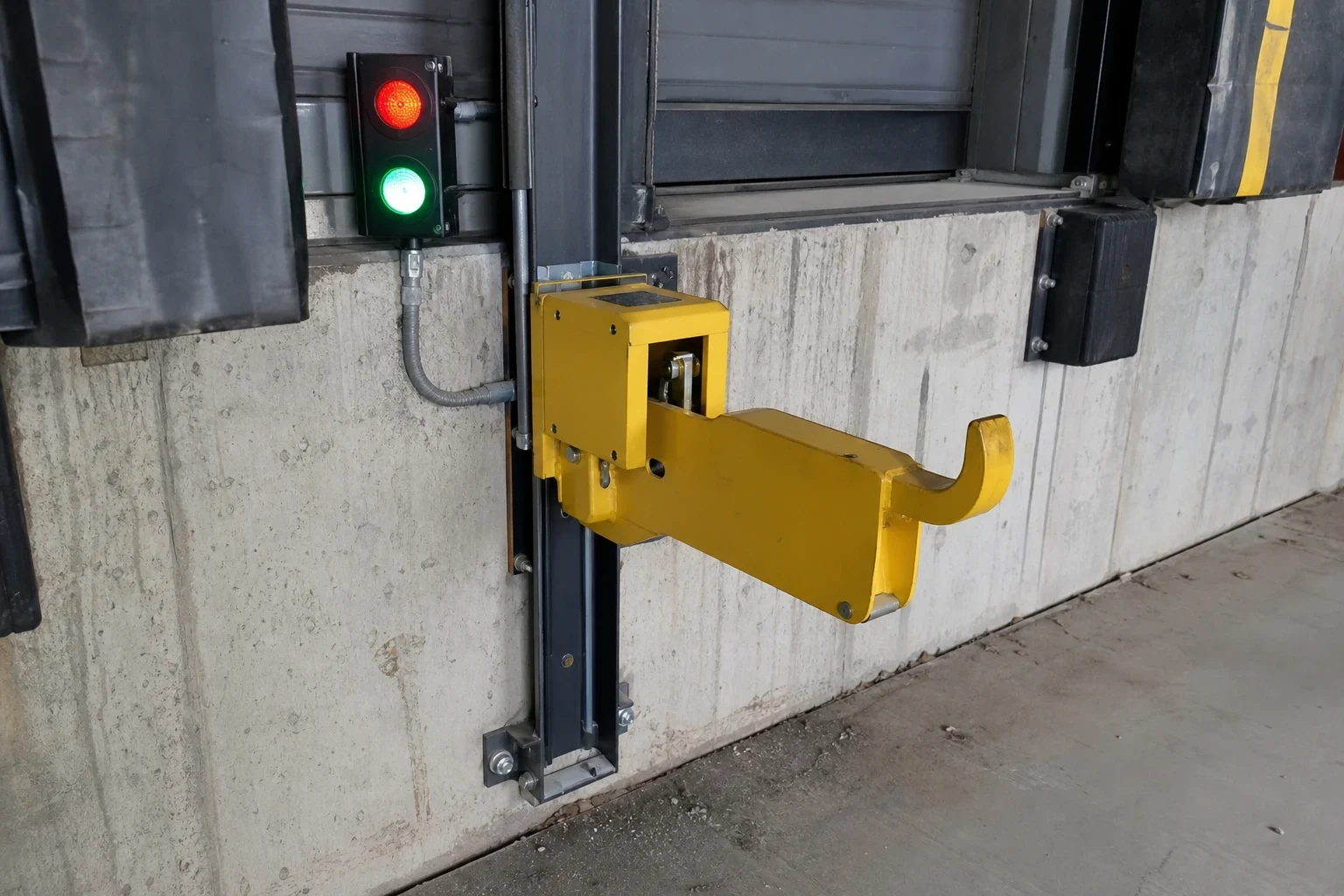
What a Vehicle Restraint Does and When to Fix It
A vehicle restraint grabs the trailer's rear impact guard, or chocks the wheel, so the truck cannot pull away or creep while a forklift is inside. When it works, nobody thinks about it. When it fails, the gap between trailer and dock can open with a loaded lift on the plate.
Most restraint trouble starts small. A loose anchor bolt lets the carriage rock. A cracked conduit lets water into a sensor. A light that shows green with the hook down teaches your crew to stop looking. We look for those details first, because they decide whether a repair holds for years or comes back next season.
We work on hook, barrier and wheel-based restraints, manual and powered. If your unit is past saving, we can talk through replacement and handle it under Loading Dock Equipment Installation.
What the Work Includes
Anchoring and mounting
We check every anchor and the concrete around it. Spalled or cracked dock face gets addressed before we bolt anything back on. The carriage has to sit square to the bumpers or the hook will miss the bar.
Hook and carriage repair
We replace worn hooks, springs, rollers and track parts. The carriage should ride up and down the track smoothly through its full range of trailer heights.
Hydraulics and motors
On powered units we fix leaks, replace hoses and seals, and test the motor and pump under load. A slow hook usually means a hydraulic or electrical problem worth catching early.
Lights, sensors and controls
Inside and outside lights must match the restraint's real position. We test the sensors, the control box and the wiring, and we seal conduit entries so moisture stays out.
Interlocks with doors and levelers
Where your setup allows it, we wire the restraint to your overhead door and dock leveler so they work in the right order. That keeps a leveler from deploying on an unsecured trailer.
Signs Your Restraint Needs Attention
Lights that disagree with the hook
Green outside or red inside when the hook is clearly not engaged is the most dangerous fault on a dock. Stop relying on that door until it is checked.
Hook won't reach or hold the bar
If the restraint rides over the impact guard or drops off it, the carriage, springs or sensor may be worn. Bent or low trailer bars play a part too, and we can tell you which it is.
Rocking or loose carriage
A carriage that moves when you push it by hand often points to loose anchors or damaged concrete behind the mount.
Slow, noisy or leaking units
Grinding, a slow raise or oil under the restraint means the motor, pump or hoses need work before they quit.
Crew working around it
If drivers chock wheels by hand because they don't trust the restraint, that tells you more than any inspection report.
How a Restraint Job Runs
- 1
We talk it through by phone
Tell us the make if you know it, the symptoms and how many doors are affected. We set a time that fits your receiving schedule.
- 2
On-site inspection
We cycle the restraint, check anchors, hook travel, hydraulics, lights and interlocks, and take photos of what we find. You get a plain answer on repair or replace.
- 3
Written estimate
We lay out the parts and labor line by line before any work starts, so you know what you are approving.
- 4
Repair and test
We work one door at a time where we can, so the rest of your dock keeps moving. Then we test the restraint against a real trailer when one is available, walk your lead through the lights, and clean up.
What Moves the Cost
Restraint work ranges from a sensor swap to a full replacement with new concrete repair. We price after we see the unit and the dock face. You get the number in writing before we start.
- Type of restraint
- Manual hooks, powered hooks and wheel-based units differ a lot in parts and labor.
- Condition of the concrete
- Crumbling dock face behind the mount has to be repaired first. Winter salt and freeze-thaw cycles often leave this damage around anchors.
- Electrical and interlock work
- Running new conduit, replacing a control box or tying into the door and leveler adds time.
- Parts availability
- Common parts are quick. Older or discontinued models may need a substitute part or a replacement unit.
Vehicle Restraint Questions
Something not covered here? (570) 715-6437
Can you work on a restraint brand you didn't install?
Yes. We service most hook, barrier and wheel-based restraints regardless of who put them in. If a part is no longer made, we will tell you and give you options.
Should I repair my old restraint or replace it?
It depends on the carriage, the track and the concrete behind it. If those are sound, a repair usually makes sense. If the mount is failing or parts are gone, replacement is often the better spend, and we will say so plainly.
Why does my restraint miss some trailers?
Trailer impact guards sit at different heights, and some are bent or damaged. A worn spring or misaligned carriage makes it worse. We check both sides so you know whether it's your equipment or the trailers.
Will the dock have to shut down while you work?
Usually only the door we are working on. We plan around your receiving windows and keep other doors open.
Can you connect the restraint to my dock leveler and overhead door?
In many cases, yes. Interlocks keep the leveler and door from operating until the trailer is secured. We look at your controls and tell you what is possible at your dock.
How often should restraints be checked?
They should be looked at on a regular schedule along with the rest of the dock. Our Loading Dock Preventative Maintenance visits cover restraints, levelers and doors in one trip.
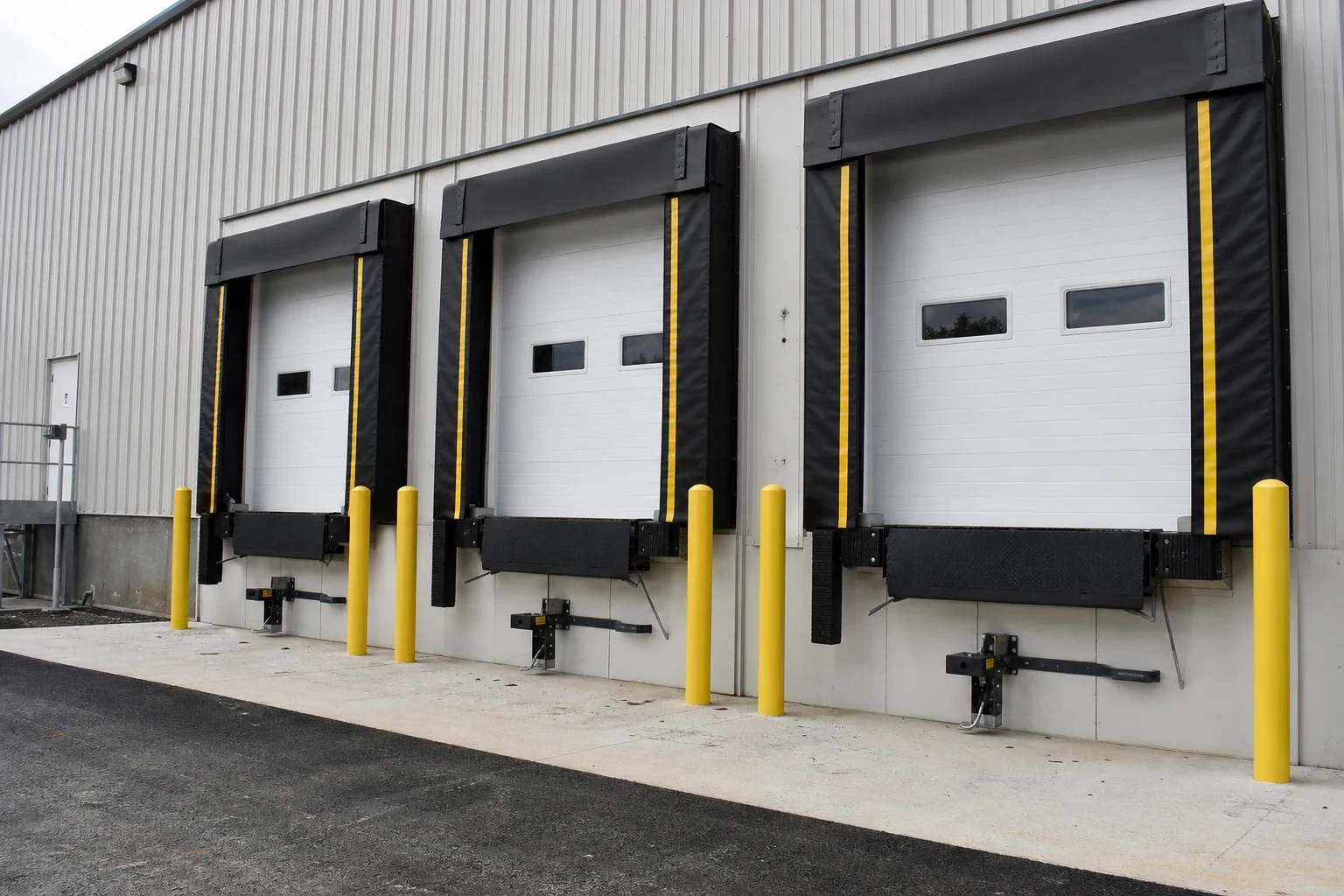
Get Your Restraints Holding Again
Tell us which doors are giving you trouble and what you're seeing. We'll set a visit and give you a straight answer on the fix.