ServicesPreventative Maintenance
Loading Dock Preventative Maintenance in Stroudsburg
We service your dock levelers, overhead doors, vehicle restraints and seals on a set schedule. Every visit covers the small stuff that wears first: hinge pins, spring tension, hydraulic hoses, loose anchors. Catch it early and your dock keeps running when the trucks show up.
What a maintenance visit actually does
Dock equipment rarely fails all at once. A leveler lip hinge runs dry, then binds, then cracks a weld. A door spring loses tension a little each month until the opener strains and the cable frays. Preventative maintenance means someone puts hands on each piece before that chain gets to the expensive part.
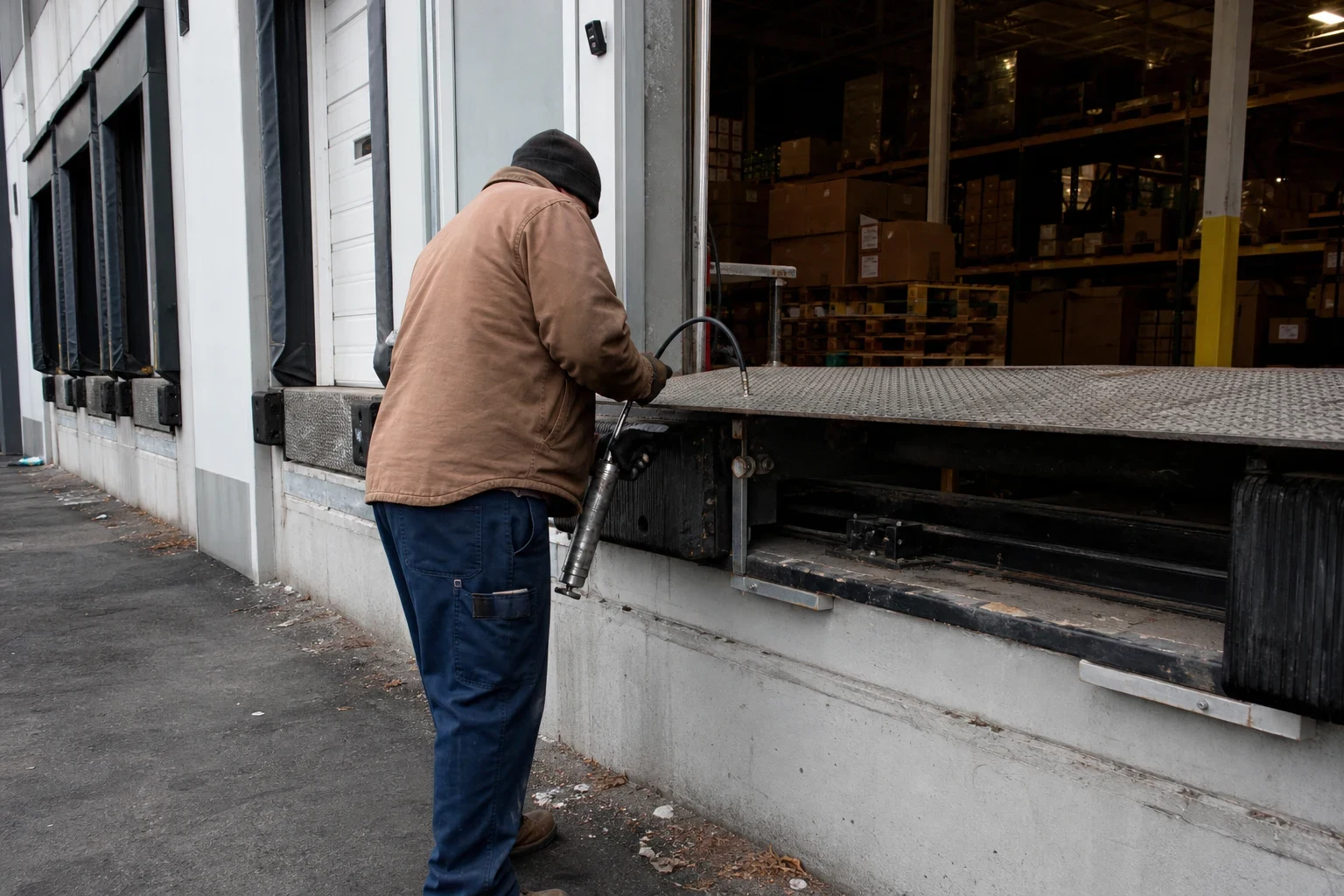
We work door by door. We clean out the leveler pit, grease every fitting, check hydraulic fluid and hoses, test the restraint, and run the overhead door through full cycles while we watch the cables and rollers. Then we tighten what has worked loose. Anchor bolts, bumper fasteners and door track brackets back off under daily truck impact, and a loose bolt is where most real damage starts.
It is the right call for any facility that runs trucks every day and cannot afford a dead dock door mid-shift.
What we check on every visit
- Dock leveler service
- We clear debris from the pit, grease the lip hinge and rear hinge, and check the hydraulic cylinder, hoses and fluid level. On mechanical levelers we check the hold-down and spring adjustment so the deck rises and falls at a controlled speed.
- Overhead door hardware
- Springs, cables, drums, rollers and hinges get inspected and adjusted. We balance the door so it does not drift or slam, and we check the bottom seal and track alignment.
- Vehicle restraint testing
- We cycle the hook or barrier, check that it holds the trailer bar, and confirm the inside and outside lights match what the restraint is actually doing. A light that says locked when it is not is a safety problem, so we fix it the same visit when we can.
- Bumpers, seals and shelters
- Worn dock bumpers let trailers hit the wall and the leveler. We measure wear, tighten fasteners and note torn seal pads that let in cold air and water.
- Written report with photos
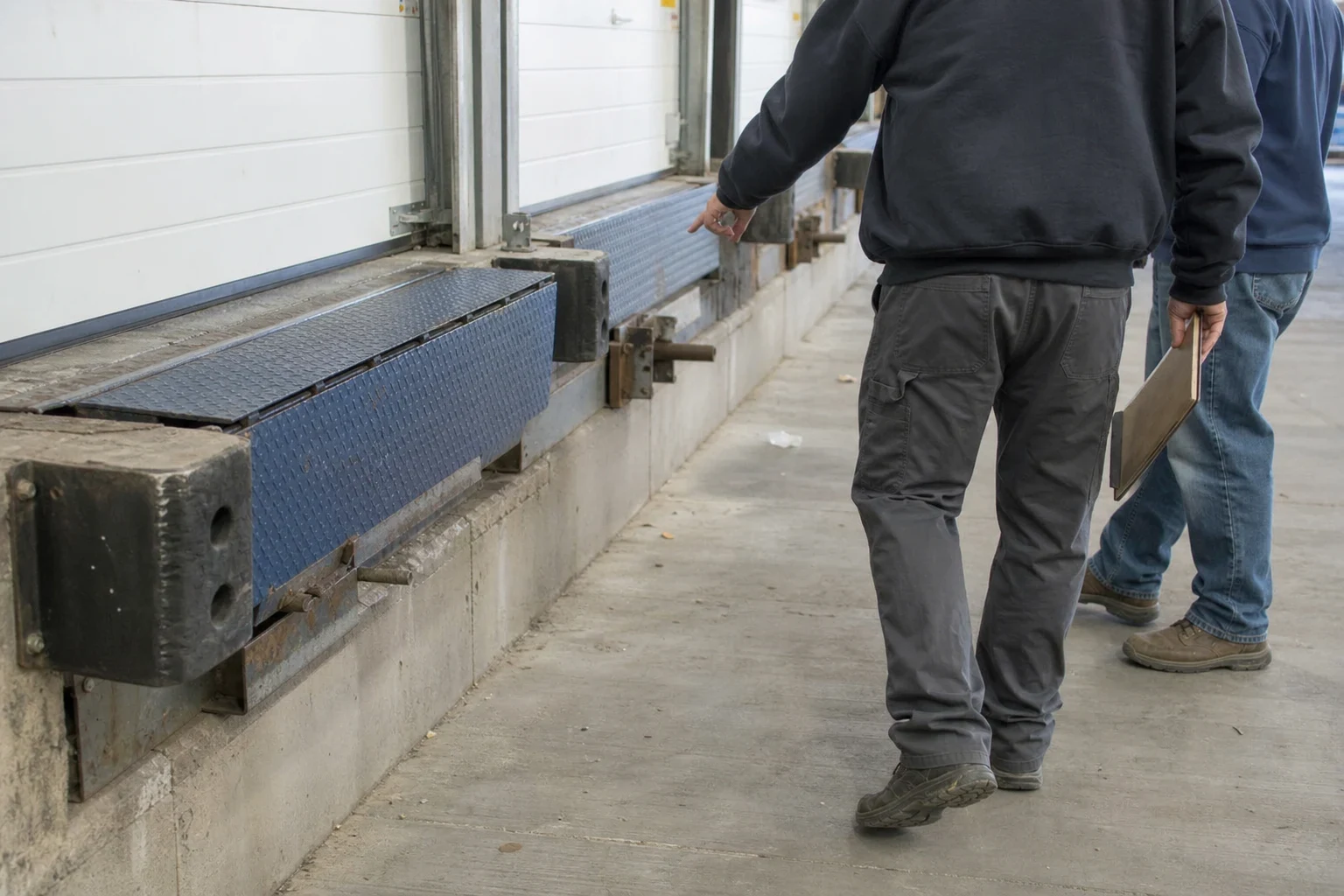
- You get a door-by-door list of what we did, what we found and what can wait. Photos show the worn part so you can see it for yourself.
Signs your dock is overdue for maintenance
The leveler lip is slow or stalls
A lip that hangs halfway or drops late usually means a dry hinge or low hydraulic pressure. Both get worse fast under load.
Oil in the pit
Hydraulic fluid under the deck points to a weeping hose or cylinder seal. Caught early, it is a hose. Caught late, it can be a cylinder.
Doors that bang, drift or shake
An overhead door that will not stay put or slams on the way down is out of balance. That puts strain on the springs, cables and operator.
Bumpers worn to the bolts
Once the rubber is gone, trailers start hitting steel and concrete. That damage spreads to the leveler and the dock face.
No one remembers the last service
If there is no record of the last visit, it has been too long. A baseline inspection tells you where you stand.
What moves the cost of a maintenance plan
The price comes down to how much equipment we service and how hard it works. We give you the number by phone or after a walk-through, broken out per door so you know what you are paying for. Repairs we find are quoted separately and only done with your okay.
Number of dock positions
A two-door grocery dock and a twenty-door distribution center are very different days. More positions means more time on site.
Type and age of equipment
Hydraulic levelers, mechanical levelers, high speed doors and powered restraints each take different checks. Older equipment usually needs more adjustment and closer looks.
How often we come out
High-traffic docks running multiple shifts often need quarterly visits. Lighter use may only need two a year.
Scheduling around your shifts
Working early, late or in short windows between trucks can add time. We plan it with you up front.
How a maintenance day runs
- 1
Walk the dock with your team
We start with your dock manager or maintenance lead. You tell us which doors give trouble and which ones you need open, and we plan the order around your shipping schedule.
- 2
Lock out one door at a time
We lock out and tag the door we are working on and leave the rest in service. Most facilities keep receiving while we work.
- 3
Service, adjust and tighten
Each position gets cleaned, greased, adjusted and tested. Small parts like a roller, seal or hose fitting we replace on the spot if we have it and you approve it.
- 4
Report and next visit
Before we leave, we go over the report with you, flag anything that needs a repair quote and set the date for the next visit. In the Poconos we like one visit before winter, when cold stiffens seals and thickens hydraulic fluid.
Common questions about dock maintenance
How often does our dock equipment need a service visit?
It depends on your traffic. Docks that move trucks all day across two shifts or more generally call for a quarterly visit. A store with only a few deliveries a day can usually manage with two visits a year. After we look at your equipment and hear how it gets used, we suggest a schedule.
Do we have to stop receiving while you are here?
No. We lock out just the position we are working on, one door after another. The rest of your doors keep running, and we fit our work around incoming trucks.
Do you service equipment another company installed?
Yes. We work on levelers, overhead doors, high speed doors, rolling grilles and vehicle restraints from many manufacturers. If a part is hard to get, we tell you up front.
What happens if you find something that needs a real repair?
We show you the part, explain what is wrong and tell you whether it needs fixing now or can wait. The repair is quoted on its own, and we go no further than the maintenance work until you say yes.
Can our service records help with our safety program?
Every door gets a dated report, giving your safety and compliance team a clear record of what we checked and what we fixed. That record is useful when an insurer or auditor asks about your dock equipment. We provide the paperwork; how you use it in your program is up to you.
Put your dock on a schedule
Tell us how many doors you run and what equipment is on them. We will set up a first visit for Stroudsburg or nearby facilities like East Stroudsburg and Smithfield and give you a plan that fits your shifts.