ServicesEquipment Installation
Loading Dock Equipment Installation in Stroudsburg
New dock equipment is only as good as the way it goes in. We set levelers, vehicle restraints, doors and seals square to the building, anchor them into sound concrete and test every cycle before your crew starts using the dock again.
What Installation Covers and When It Makes Sense
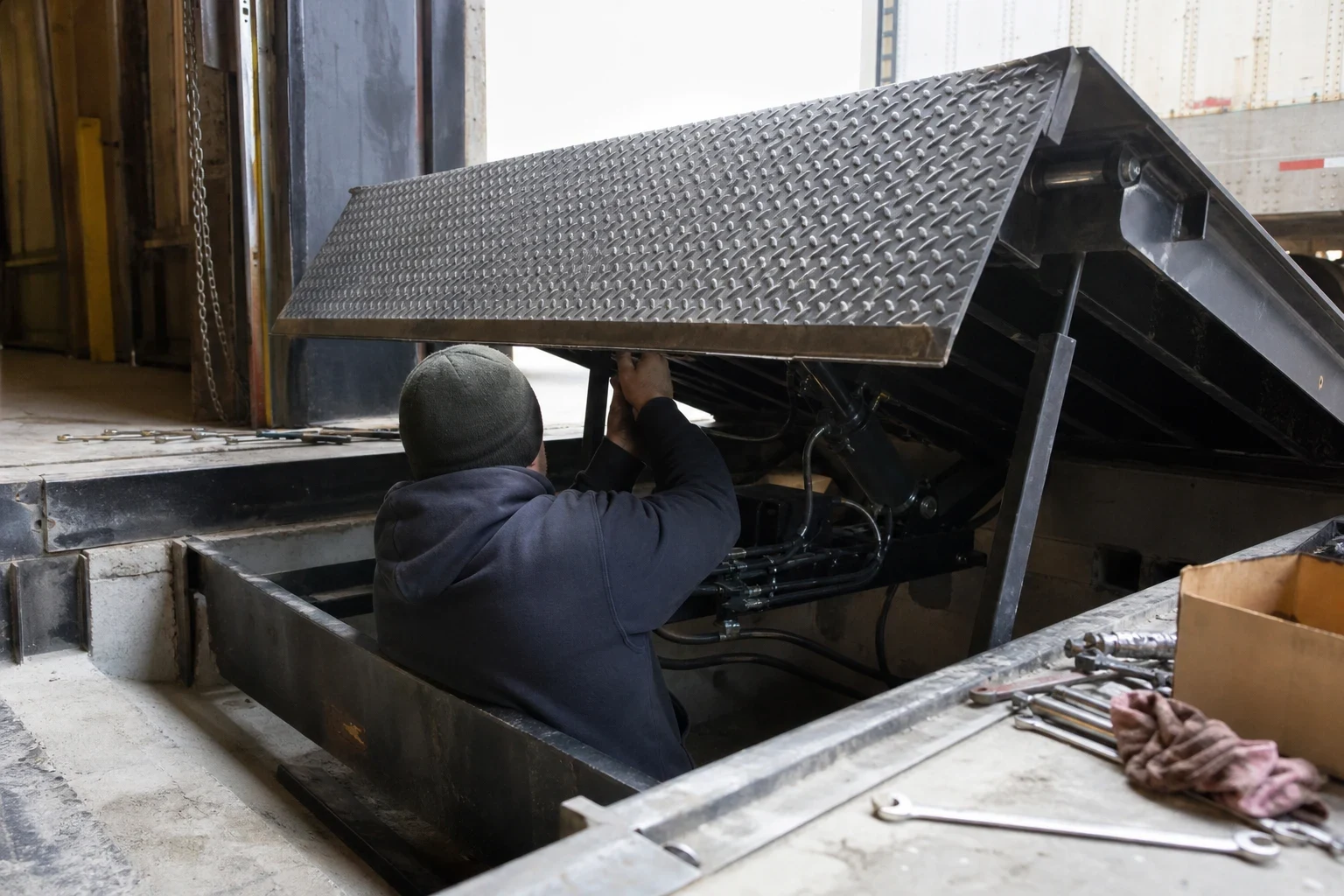
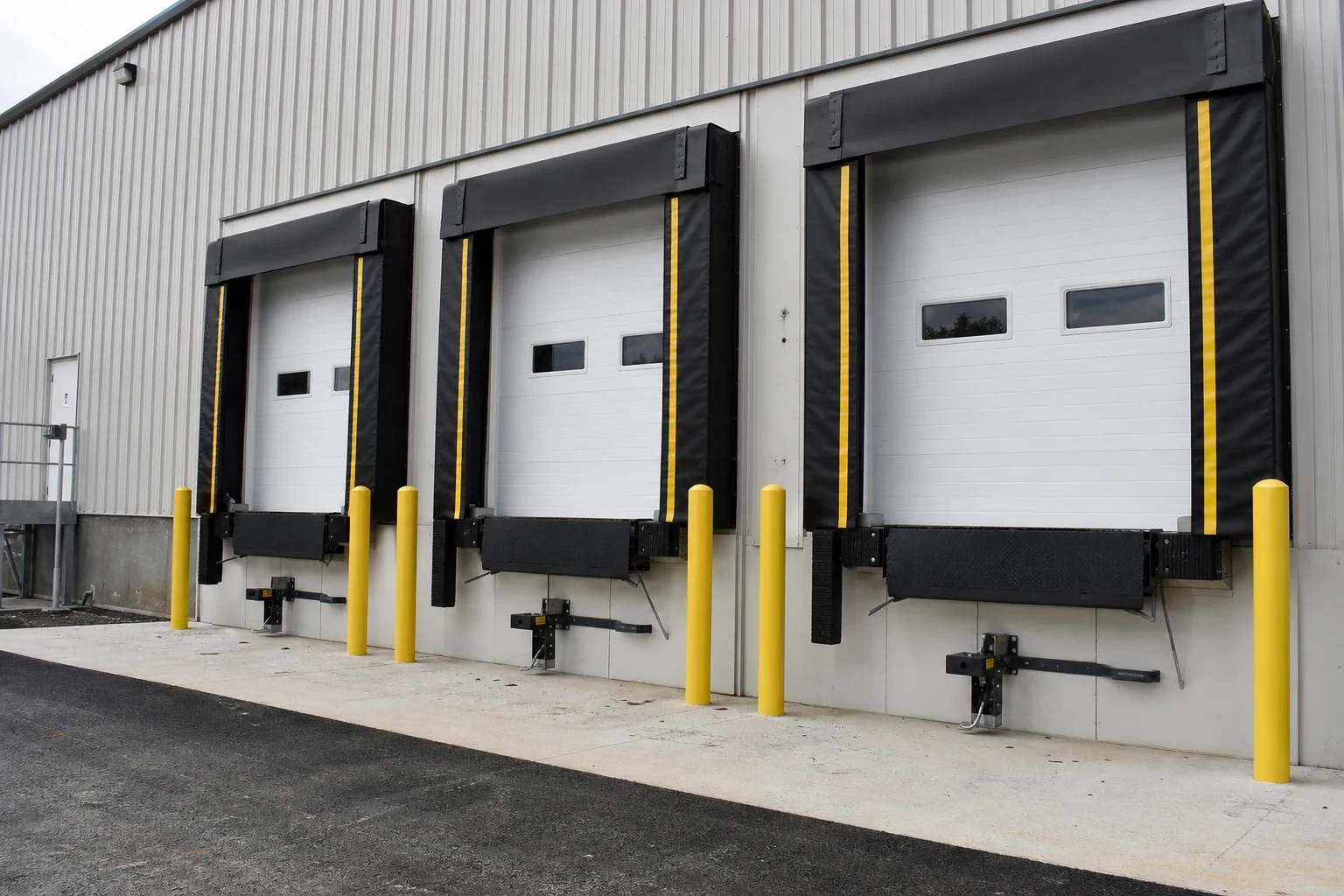
We install the equipment that makes a loading dock work: dock levelers, vehicle restraints, overhead doors, high speed doors, rolling grilles, dock seals, shelters and bumpers. That can mean one new leveler in an old pit or a full dock position built out from bare concrete.
Most early failures we see on other installs trace back to small things. A leveler frame that was never shimmed flat. Bumpers mounted an inch too low. Wiring run without conduit where a forklift can catch it. None of it shows on day one. It shows in year two, when welds crack and hydraulic seals start to weep.
Installation is the right call when you are adding a dock position, replacing equipment that is past repair or changing the kind of trucks you receive. If you are not sure whether to repair or replace, we will tell you straight after we look.
What Goes Into a Proper Dock Install
Pit and embed check
We measure the pit for square, depth and level before anything is set. If the curb angle is loose or the concrete is spalled, we tell you and fix it first, because a leveler bolted to bad concrete will not stay put.
Shimming and anchoring
Leveler frames get shimmed tight at every bearing point and welded or anchored to the embeds. That keeps the deck from flexing under a loaded forklift.
Bumper and seal placement
We set bumpers at the right height and projection for the trailers you actually receive. Seals and shelters are hung so they close against the trailer without tearing on the first season.
Electrical and controls
Control boxes go where operators can see the trailer. Wiring runs in conduit, protected from traffic, with proper disconnects so the equipment can be locked out for service.
Door and track setup
Overhead door tracks are set plumb and secured to solid framing. Springs are balanced so the door holds at mid-height and travels smoothly.
Removal and cleanup
We pull and haul away old equipment, sweep the pit and leave the dock ready to work.
Signs It Is Time for New Dock Equipment
Repairs keep stacking up
If the same leveler or door needs service every few months, the parts money is going into something that is worn out. New equipment may cost less over the next few years.
Trailers do not line up
A leveler with too little lip reach or the wrong range leaves steep transitions or gaps. That slows loading and puts strain on forklifts and operators.
No vehicle restraint
Relying on wheel chocks alone leaves room for trailer creep and early departure. Adding a vehicle restraint is one of the biggest safety upgrades a dock can get.
Drafts and weather at the door
Torn seals and gaps around the door let in heat, cold and snow. In a Pocono winter that means slick dock floors and higher heating bills.
A cracked or sagging deck
Visible cracks, a deck that bounces or a frame pulling away from the pit are signs the structure is done. Those need replacement, not patching.
How an Install Day Runs
- 1
Site visit and measurements
We look at the dock, measure the pit and door openings, and ask about your trailers, loads and traffic. Then we explain what fits and why.
- 2
Written scope
You get a line-item scope listing the equipment, the prep work and the electrical. If the concrete needs work, it is spelled out before we start.
- 3
Scheduling around your shipping
We plan the work one dock position at a time where we can, so the rest of the building keeps moving. We agree on hours ahead of time to keep downtime short.
- 4
Install and test
We set, shim, anchor and wire the equipment, then cycle it many times with a loaded check. We walk your operators through the controls and safety lockout before we hand it over.
What Moves the Cost of an Install
Every dock is different, so we price from what we find on site. The equipment itself is only part of the number. Prep work, access and wiring often decide the rest, and we list each one separately so nothing comes as a surprise.
- Type of equipment
- A mechanical leveler, a hydraulic leveler and an air-powered unit all cost different amounts to buy and install. Vehicle restraints and high speed doors add their own controls and wiring.
- Condition of the pit
- A clean, square pit is quick. Broken curb angles, crumbling edges or a pit that needs reshaping add concrete and steel work.
- Electrical work
- Hydraulic and powered equipment needs power at the dock. The distance from your panel and how the conduit has to run both matter.
- Number of positions
- Doing several docks in one project saves setup time per position. It also makes it easier to match equipment across the building.
- Working hours
- Installs done after hours or on weekends to protect your shipping schedule take more labor time to plan.
Common Questions About Installs
Something not covered here? (570) 715-6437
How much time does a leveler install take?
Swapping a unit into a pit in good shape often takes a single day. When the pit needs steel or concrete repair, allow more time for that work and for the concrete to cure. After the site visit, we give you a schedule you can count on.
Will a new leveler go into the pit we have now?
In most cases, yes, since many levelers are built for standard pit sizes. We take measurements first. If the embeds are damaged or the pit is out of square, we repair them so the new unit sits level.
Does the whole dock go down while you work?
No, only the position we are on. We schedule around your shipping and receiving hours and can do one door at a time so trucks keep using the rest.
Will you install equipment we purchased elsewhere?
We can check it and let you know whether it suits your dock and your trailers. If you haven't purchased yet, our loading dock equipment sales page explains how we help choose the right units.
What do you do with our old equipment?
Taking it out and hauling it off is part of the job. We clean out the pit before the new unit goes in.
How can we keep new equipment in good working order?
Loading dock preventative maintenance on a regular basis finds worn seals, low hydraulic fluid and loose anchors before they become bigger problems. We can build a schedule around how hard your docks work.
Get New Dock Equipment Set Up Right
Tell us about your dock, your trailers and your schedule. We will come out, measure and give you a clear scope for the work in Stroudsburg and the surrounding area.